Somewhere along the way, we were handed a map.
It had neat arrows and bright red lines, a tidy path from childhood to adulthood with reassuring signposts along the way: “Learn this,” “Memorize that,” “Pass here,” and, if you’re lucky, “Arrive.” The problem is, most of us grew up realizing the map was a lie. Life doesn’t hand you turn-by-turn directions.
It’s like the line from The Lord of the Rings:
“Not all those who wander are lost.”
Maybe we were supposed to wander. Maybe we were never meant to stick to the path someone else drew. Samantha Jansky figured that out early.
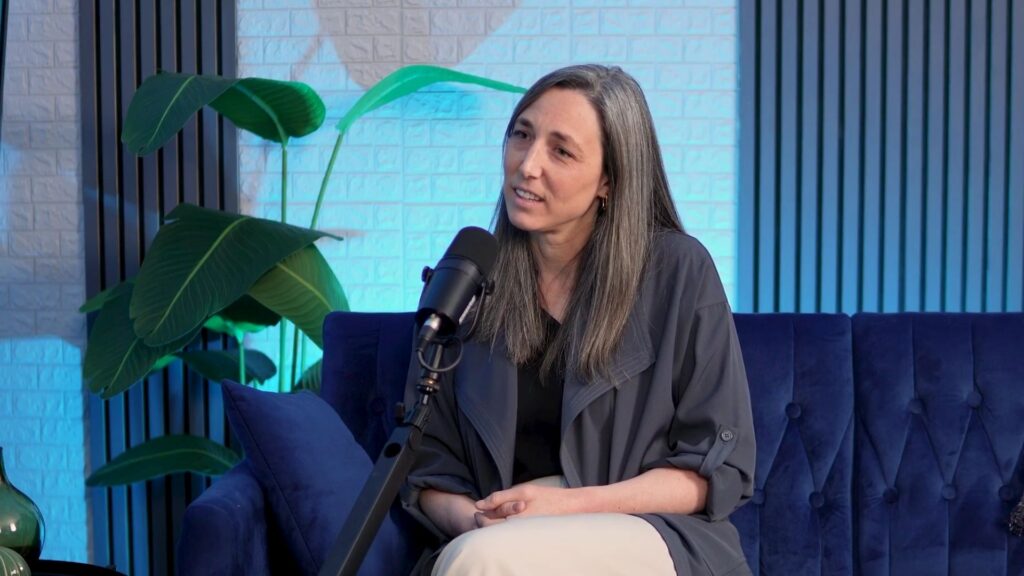
Samantha is the kind of person who makes you believe that childhood isn’t just a phase you outgrow—it’s a blueprint you spend the rest of your life decoding.
Today, she’s the head of school at Ascent Academy, a learner-driven school that’s less about filling heads and more about opening doors. But before all that, she was just a kid in Lakewood, Colorado, at Jefferson County Open School—a place where learning wasn’t mandatory, it was magnetic. “I loved school,” she says, with the kind of sincerity that makes you believe in it again. “They sent us traveling around the world. We learned through experiences. We had projects that took us deep into what we were curious about.”
She grew up thinking that was normal. Curiosity wasn’t something you had to earn. Learning wasn’t a box to check. It was just life. Then she got to college and noticed something. She was sitting in the front row, hand raised, hungry for more, while most of her classmates were slouched in their chairs, waiting for the clock to run out. “I was confused,” she admits. Not because they weren’t capable—but because they’d learned to see education as a transaction. Get the grades, get the job. The end.
For Samantha, it was always the beginning.
That seed—this idea that maybe learning could be different—carried her to some unexpected places. Like Haiti, just after the earthquake of 2010, where she worked with a tiny organization running schools. It was there, in the rubble and rebuilding, that she saw what education really was: not a luxury, not a checkbox, but a lifeline. “We all know it,” she says, “but I felt like I saw it on a different level.” The irony wasn’t lost on her. In a place where aid poured in for water, food, and shelter, the thing no one seemed willing to fund was the thing she believed mattered most. Education.
She thought maybe education policy was the answer. Graduate school. Statistics. Sitting at a desk crunching numbers that might, eventually, move the needle. But then a friend said something she couldn’t shake. “You need to be in the classroom.” Because no one was going to listen to her ideas if she didn’t understand the ground floor. And so, in a twist worthy of any good fable, she walked away from the world of policy and into a classroom. Specifically, into the world of Acton Academy in Austin, Texas. What was supposed to be a one-year apprenticeship turned into a calling.
The school she now leads, Ascent Academy, doesn’t look like the ones most of us grew up in. There are no desks in neat rows. No bells telling you where to go next. Instead, there’s a Montessori work cycle for four-year-olds learning to iron their own clothes and make tea. Six-year-olds leading discussions about ethical dilemmas. Nine-year-olds setting their own goals and managing their own schedules. There are town halls where kids debate community issues, Socratic circles where they wrestle with big questions, and quests that let them explore architecture one month and survival skills the next. There’s no principal handing out answers. There are guides asking questions and kids figuring out their own truths.
Samantha talks a lot about agency—the ability not just to make choices but to own them. It sounds simple. It’s anything but. “We’ve completely changed the role of the adult in the room,” she says. There’s no top-down authority. No one swoops in to fix things when they go wrong. And they do go wrong. Kids mess up. They break their contracts with each other. They argue. They fail. And then they rebuild. That’s the point.
Failure isn’t a detour on the hero’s journey; it’s the path. Samantha believes in that journey. She’s seen it play out over and over again. Not in myth, but in kids as young as four who learn that their word matters because they helped write the contract that guides their studio. Who learn to trust themselves because no one else is going to swoop in and tell them what to do next. Who learn to trust each other because when the work gets hard, it’s their community that pulls them through.
Her favorite line sums it up:
“Clear thinking leads to good decisions. Good decisions lead to the right habits. The right habits lead to strong character. And character becomes your destiny.”
It’s not a slogan. It’s a map. But this time, the kind you draw yourself.
There’s a story Samantha tells about one of her students who, years after a tough architecture quest, took an apprenticeship with an architect and is now planning to go into real estate development. He figured out what he was good at, what sparked his curiosity, and he followed it. Not because someone told him to. Because he chose it. That’s how it works at Ascent. You get the reps. You build the muscle. You find out who you are—not because someone hands you a label, but because you carve it out of the clay yourself.
It’s like walking into Alice in Wonderland:
“Would you tell me, please, which way I ought to go from here?”
“That depends a good deal on where you want to get to,” said the Cat.
And that’s it.
No one can tell you which way to go if you don’t decide where you’re headed.
And maybe that’s the moral here. Not that we all need to be entrepreneurs or architects or change-the-world visionaries. But that we were never meant to be handed the map in the first place. The journey is the point. The questions are the point. The failure and the trying again are the point.
And as for where it all leads? Well, that part’s still being written.
To hear more about Samantha’s inspiring journey tune in to her episode of Navigating Complexity.