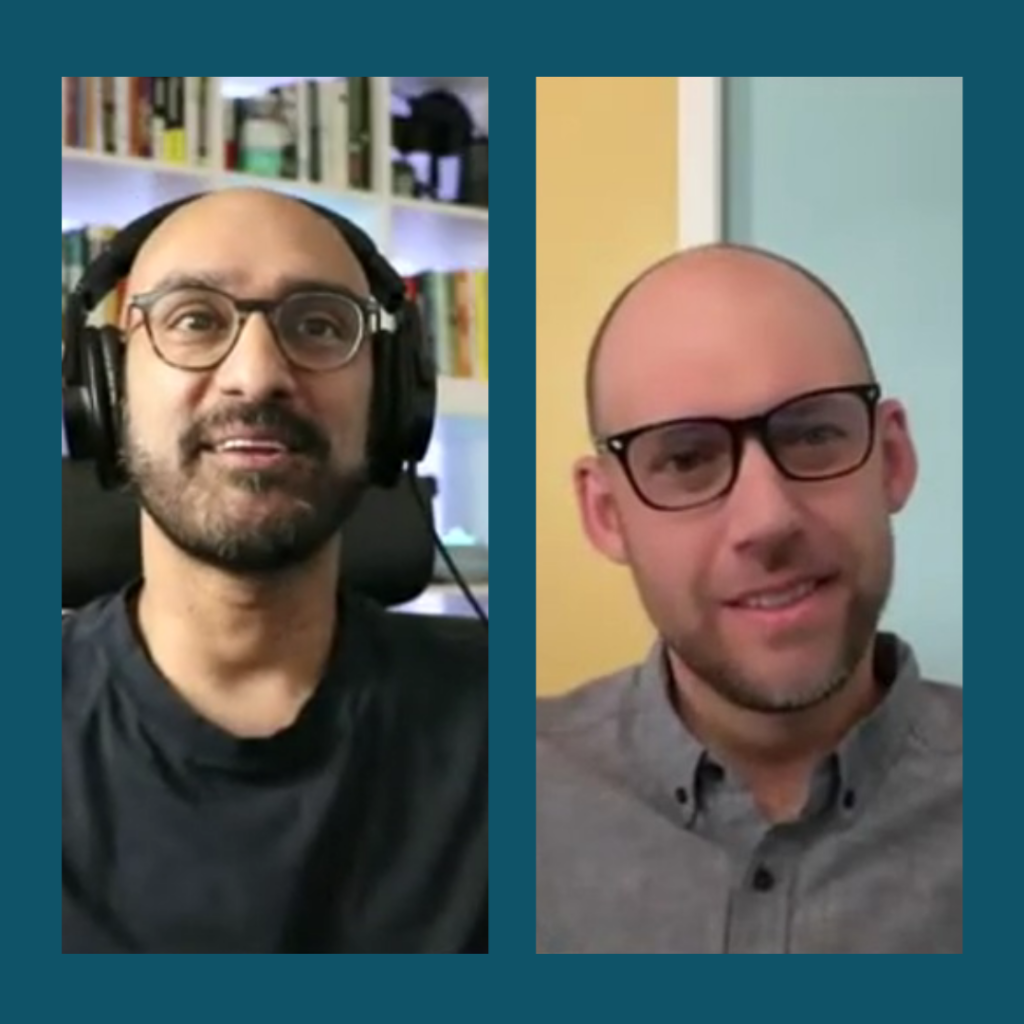
Success is often portrayed as a straight line—choose the right path early, stay consistent, and steadily climb upward. But in reality, the most effective and interesting careers rarely follow that pattern. In a conversation on the Sunny Ray Show, Matt McDonnell shared a journey that looks anything but linear: from philosophy student to sailboat instructor, to teacher, to law school dropout, to startup operator, to real estate developer, and ultimately to venture capitalist. What might seem like a series of unrelated pivots is, in fact, a compounding set of experiences driven by curiosity and intention.
Each phase of Matt’s career added a layer of capability that became valuable later. Sailing taught him how to operate in uncertain, constantly changing environments. Teaching refined his communication skills and deepened his understanding of leadership. Legal training sharpened his structured thinking and approach to risk. Startups gave him exposure to speed, iteration, and execution, while real estate grounded him in capital allocation and operational systems. Rather than being disconnected, these experiences stacked into a unique combination that set him apart. As he put it, being the “square peg in a sea of round holes” often creates outsized value.
Sign up to my newsletter here: https://mmmcdonnell.com/#newsletter
That perspective became especially powerful when he was building The Geyser Group. Working directly in development, he noticed a clear gap: despite being one of the largest asset classes in the world, real estate remained significantly under-digitized. This observation led to the creation of Stellifi, a venture firm focused on investing in technology across the commercial real estate value chain. The firm’s philosophy is grounded in practicality—backing companies that can make real estate operations better, faster, or cheaper today, not at some undefined point in the future.
Proptech, however, is not an easy space to build in. Unlike traditional software markets, real estate comes with long sales cycles, fragmented decision-making, operational complexity, and a general resistance to change. These challenges discourage many founders, but they also create opportunity. Matt’s advantage is that he is not just an investor evaluating these businesses from the outside—he is an operator and customer within the ecosystem. This allows him to test products in real-world environments, provide meaningful feedback, and help companies refine both their product and their go-to-market strategy. A key focus for Stellifi is backing businesses that create defensible data moats—datasets that are difficult or impossible for competitors to replicate—which ultimately drive long-term value.
When it comes to founders, Matt looks beyond surface-level traits like charisma or credentials. The defining characteristic he emphasizes is the willingness to confront problems directly. Great founders, in his view, run toward challenges rather than avoiding them. He references the idea often attributed to Mark Twain: if you have to eat a frog, eat it first thing in the morning. The implication is straightforward—tackle the hardest, most important problem first, because that is what moves the needle. This mindset not only accelerates progress but also reduces the anxiety that comes from avoiding difficult decisions.
Beyond business, Matt’s approach extends into how he designs his life. Splitting time between Austin and Colorado, he manages multiple roles—investor, developer, writer, podcast host, and father—not through rigid balance, but through alignment. He follows what genuinely interests him, builds systems that create leverage on his time, and evaluates success through objective outcomes rather than appearances. Perhaps most importantly, he is unapologetic about the way he structures his life, recognizing that not every opportunity or partnership needs to be a fit.
At its core, this story is not just about venture capital or real estate. It is about building a life that compounds over time. When curiosity leads to skill development, skills create opportunities, and opportunities expand freedom, the path—however unconventional—begins to make sense in hindsight. The takeaway is not that everyone should follow the same journey, but that a perfectly linear plan is neither necessary nor optimal. What matters more is the willingness to pursue what genuinely engages you, to embrace complexity, and to build something uniquely your own over time.
Sign up to my newsletter here: https://mmmcdonnell.com/#newsletter