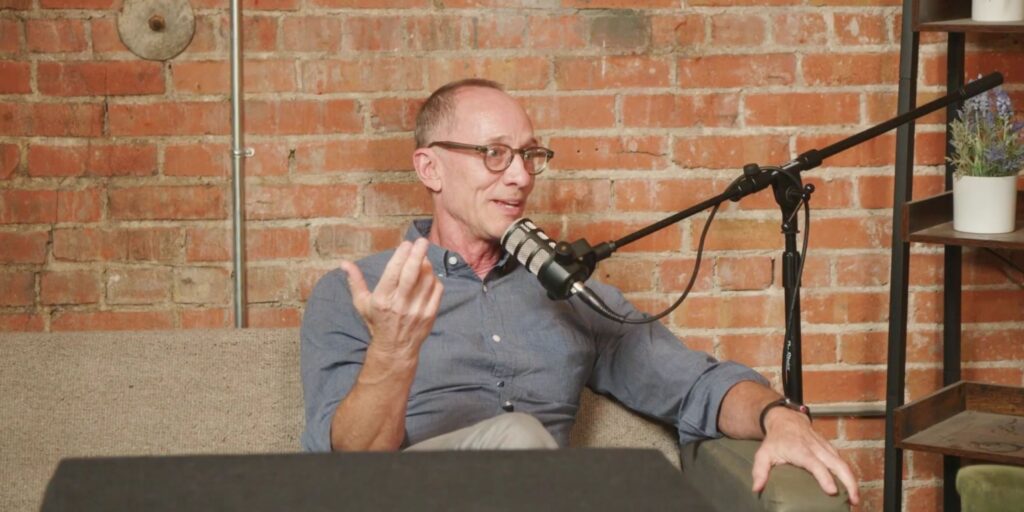
When Rick Archer decided to pursue architecture at the age of 12, it seemed like a straightforward melding of art and math, offering a creative outlet that also aligned with the practical and structured values emphasized by his family and the societal norms of the time. But as his story unfolded, it became evident that architecture, like life itself, was far from a plannable journey. It was a narrative shaped by complexity, identity, and transformation. Ultimately, this journey reshaped Rick on a deeply personal level, fostering his transformation as an architect and individual. At the same time, it profoundly impacted the environments and communities he worked with, setting new benchmarks for sustainable and human-centric design.
Rick’s early years were shaped by a love for art, tempered by family expectations. His father’s political career exposed him to the intensity of public life, and architecture became a refuge, a way to retreat into creativity and structure. Yet, as he discovered, architecture was just as political, just as intricate. His initial ambition of fame quickly gave way to deeper questions about purpose and fulfillment. “I realized pretty soon into my career that I was getting burned,” he reflects. “It was taking a lot of the joy out of what I was doing.”
When we embark on a new path, it’s easy to fixate on superficial markers of success, like fame or recognition. But as Rick’s journey shows, these can often distract us from our deeper purpose. He began to understand that what he truly sought was not external accolades but a way to express himself authentically and help others do the same. This realization required time, introspection, and the courage to listen to the quiet, true voices within. It was through this process that Rick not only rediscovered his purpose but also redefined the very nature of his work.
That realization prompted a radical decision: Rick stepped away from architecture for nearly two years to find himself. It was during this period of reflection that he began to embrace vulnerability and authenticity, discovering the power of being fully known and loved. These lessons would inform his approach to architecture, not as a pursuit of recognition, but as a means to create spaces that inspire and transform.
A pivotal moment came when Rick and his college friends founded Overland Partners in San Antonio during the deep recession of 1987. They had no illusions about the challenges ahead. “We really wanted just to be together. We wanted to use the business as a way to cultivate the friendship.” But it was their encounter with Lady Bird Johnson that profoundly shaped their trajectory. Selected to design the Lady Bird Johnson Wildflower Center, Rick and his team faced skepticism and limited resources. Yet, it was Lady Bird’s vision—to create a space that looked as if “God put it there”—that set the bar impossibly high and pushed them to innovate.
The project became a turning point, not just for Overland Partners but for the broader field of sustainable design. The Wildflower Center was the first publicly accessible sustainable building in the United States, a prototype for integrating environmental stewardship with architectural excellence. “That project changed our life,” Rick reflects. “It changed the way people began to think about how we built.” More than a technical achievement, it was a philosophical statement about living in harmony with nature, something Lady Bird embodied in her vision.
Rick’s reflections extend beyond architecture into the realm of lifestyle and consumption. “We’ve become so accustomed to being where we want to be when we want to be there,” he observes. This independence often drives over consumption and environmental degradation. Instead, Rick advocates for a return to simplicity, building only what is truly needed rather than what impresses. But is a return to simplicity possible in our society? Can we challenge ourselves to design and live in ways that nurture the environment while honoring human dignity? These are questions Rick’s work invites us to consider.
Throughout his career, Rick has gravitated toward complexity. Whether it’s working with marginalized communities or navigating the intricate relationships between stakeholders, he thrives in spaces where multiple voices and perspectives converge. His approach is less about imposing solutions and more about uncovering them collaboratively. “I’m not a boxer,” he says. “I would be much more jujitsu.”
This philosophy extends to his work as an architect, where he views his role as translating invisible ideas into tangible, meaningful structures.
Rick’s philosophy is encapsulated in the concept of the “human handprint.” Unlike the carbon footprint, which measures negative impact, the handprint focuses on the positive outcomes of design. Rick asks questions that challenge conventional metrics: Does this building provoke change? Does it cultivate relationships? Does it promote well-being? By embedding these principles into his projects, Rick has redefined what it means to create impactful architecture.
From the young architect seeking fame to the seasoned professional driven by purpose, his journey reflects the complexities of identity, ambition, and contribution. As he puts it, “We take something that exists first in the invisible world and make it visible.” And in doing so, he not only transforms spaces but also the lives of those who inhabit them.
To hear more about Rick Archer’s inspiring journey and his reflections on architecture, sustainability, and life, tune in to his episode of Navigating Complexity.